TL;DR: The Tateyama Kurobe Alpine Route and its famous 16-meter Snow Wall Walk (Yuki-no-Otani) run from April 15th to June 25th, 2026. To beat the heavy Golden Week crowds, visit on a weekday in late May or early June, book Web Tickets in advance to guarantee your transport times, and dress in warm layers to handle freezing temperatures at 2,450 meters.
If you are planning a spring trip to Japan, you likely already know the struggle: navigating shoulder-to-shoulder crowds in Kyoto or Tokyo just to glimpse a cherry blossom. At HokuList Japan, our licensed Kanazawa-based travel team consistently points visitors toward a different kind of spring awakening in Central Japan.
Instead of crowded temples, imagine stepping off the Hokuriku Shinkansen at Toyama Station, trading city humidity for the sharp, thin mountain air of the Northern Japan Alps. The Tateyama Kurobe Alpine Route—a complex, multi-vehicle journey through some of the country’s most dramatic peaks—offers a quiet, towering spectacle. Traversing the entire route takes about 6 to 8 hours. Is it worth the logistical effort? Absolutely, provided you know exactly how to navigate the altitude, the ticketing systems, and the mountain weather.
Here is exactly what you need to know to see the 16-meter snow walls this 2026 season.
2026 Snow Wall Season: Dates and Essential Data
To satisfy both tight itineraries and quick searches, here is the immediate data you need to plan your traverse.
| Feature | 2026 Schedule / Cost | Details |
| Full Route Open | April 15 – Nov 30, 2026 | From Tateyama (Toyama) to Ogizawa (Nagano). |
| Snow Wall Walk | April 15 – June 25, 2026 | Open daily 9:30 AM – 3:00 PM (weather permitting). |
| Peak Wall Height | April to mid-May | Walls reach up to 20 meters; snow remains high into June. |
| Estimated Cost | 10,000 – 12,000 JPY | Adult one-way fare for the complete traverse. |
| Web Tickets | Available Now | Standard sales opened March 13; Summer Early Bird opened March 23. |
Outsmarting the Crowds: A Local Agency’s Playbook
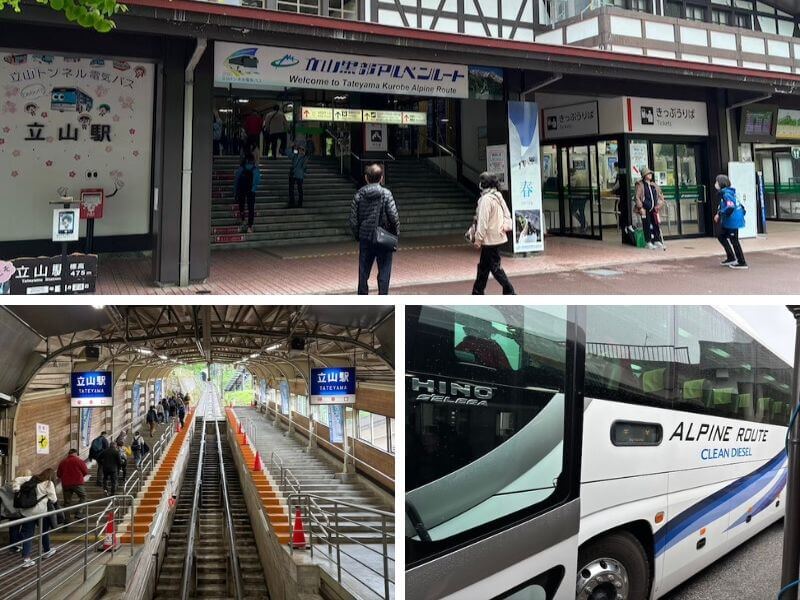
Because this route is famous globally, it naturally attracts large tour groups. However, you can secure a serene experience by adjusting your timeline just slightly.
-
The Early Morning Advantage: The crunch of fresh morning ice under your boots is vastly different from the midday slush. Aim for the earliest departures from Tateyama Station (usually around 6:40 AM or 7:00 AM). If you reach Murodo by 8:30 AM, you will experience the snow corridors in relative silence before the charter buses arrive.
-
Embrace Early June: The heavy crowds dissipate immediately after Japan’s “Golden Week” (late April to early May). By early to mid-June, the walls still easily exceed 10 meters, but the pathways breathe. The sky often clears up, contrasting brilliantly against the pristine white snow.
-
The Murodo Overnight: Most visitors ride through in a single day. Booking a night at Hotel Tateyama at the summit allows you to walk the snow corridors at dusk after the day-trippers have caught the last trolley bus down the mountain. The silence up there at night, accompanied only by the wind off the Tateyama peaks, is remarkable.
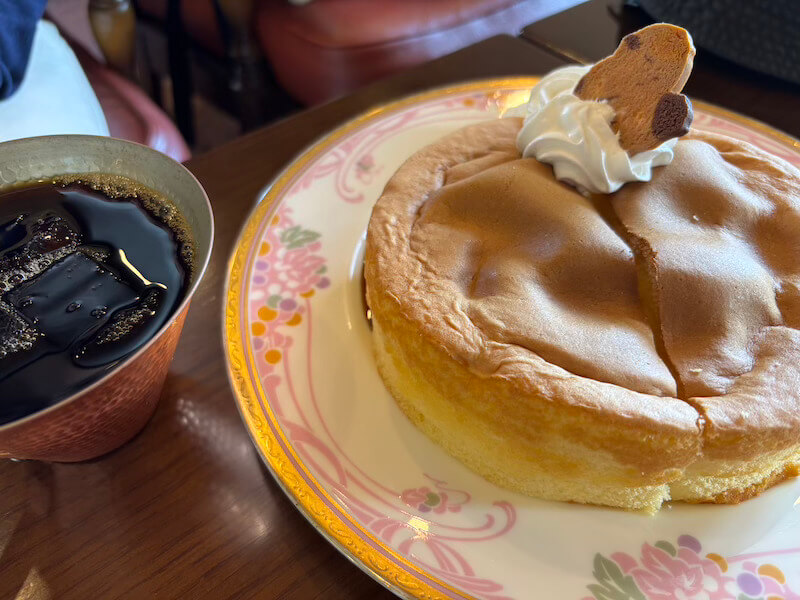
- Local Pro-Tip: A visit to Cafe Rindo (nested within the hotel) is non-negotiable. Their signature chiffon cake (pictured below) is a total MUST. Forget common “soft” textures; this cake has a unique purun-purun (jiggly and wobbly) bounce that is exceptionally light yet deeply satisfying. Pairing a slice with a strong iced brew in a traditional copper mug while overlooking the Murodo snowfield is a refined pleasure you can only enjoy when not rushing. This retro-chic space offers a taste of classic Japanese hospitality you won’t easily find elsewhere.
-
Reverse the Flow: Most travelers begin on the Toyama (Tateyama) side. Starting your journey from Ogizawa on the Nagano side puts you against the current of the heaviest traffic, often resulting in shorter queues for the Kanden Tunnel Electric Bus.
Navigating the Transport Logistics
The Alpine Route is not a hiking trail; it is a meticulously engineered sequence of cable cars, electric buses, and ropeways designed to protect the fragile alpine environment.
Securing Web Tickets is no longer optional if you want a stress-free day. As of March 13th, 2026, standard tickets are live. Purchasing these guarantees your specific boarding time for the initial Tateyama Cable Car or the Kanden Tunnel Electric Bus. Without them, you risk waiting hours in line at the base stations, eating into your time at the summit.
Packing for the Altitude
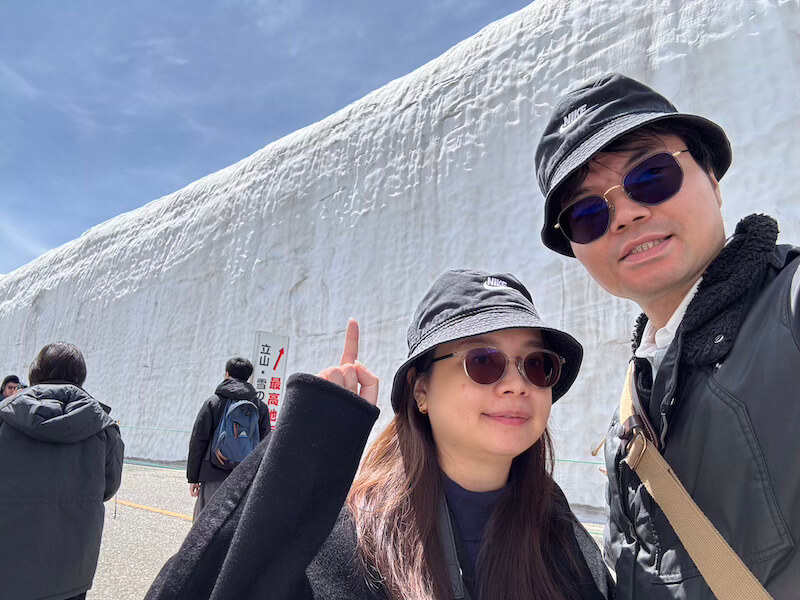
You might leave Kanazawa or Toyama in a light spring jacket, but Murodo sits at 2,450 meters. The weather changes aggressively.
-
Layer Intelligently: The air inside the electric buses and cable cars is heavily heated, but stepping out at Murodo means facing temperatures that hover around 5°C to 10°C (40°F to 50°F), accompanied by biting winds. A windproof outer shell and a fleece mid-layer are mandatory.
-
Footwear Matters: The Snow Wall Walk is paved, but exploring the surrounding Murodo plateau requires walking on compacted snow. Leave the sneakers at your hotel; wear proper trekking shoes with heavy tread.
-
Snow Blindness is Real: The glare of the late spring sun bouncing off 16-meter white walls is physically painful. Polarized sunglasses and strong sunscreen are non-negotiable.
Practical Realities to Keep in Mind
As you prepare, keep a few strict rules in mind. First, to protect both the airspace for rescue helicopters and the Ptarmigan (a protected alpine bird), drones are entirely prohibited across the entire route. Secondly, because this is a remote, high-altitude environment, medical facilities are extremely limited. Hydrate constantly and pace yourself as you exit the transport vehicles into the thinner air.
The Tateyama Kurobe Alpine Route requires deliberate planning, but the payoff is a mountain traverse unlike anything else in Asia. By locking in your tickets early and dressing appropriately, you ensure your time is spent looking up at the ice walls, rather than standing in a queue.


Comment